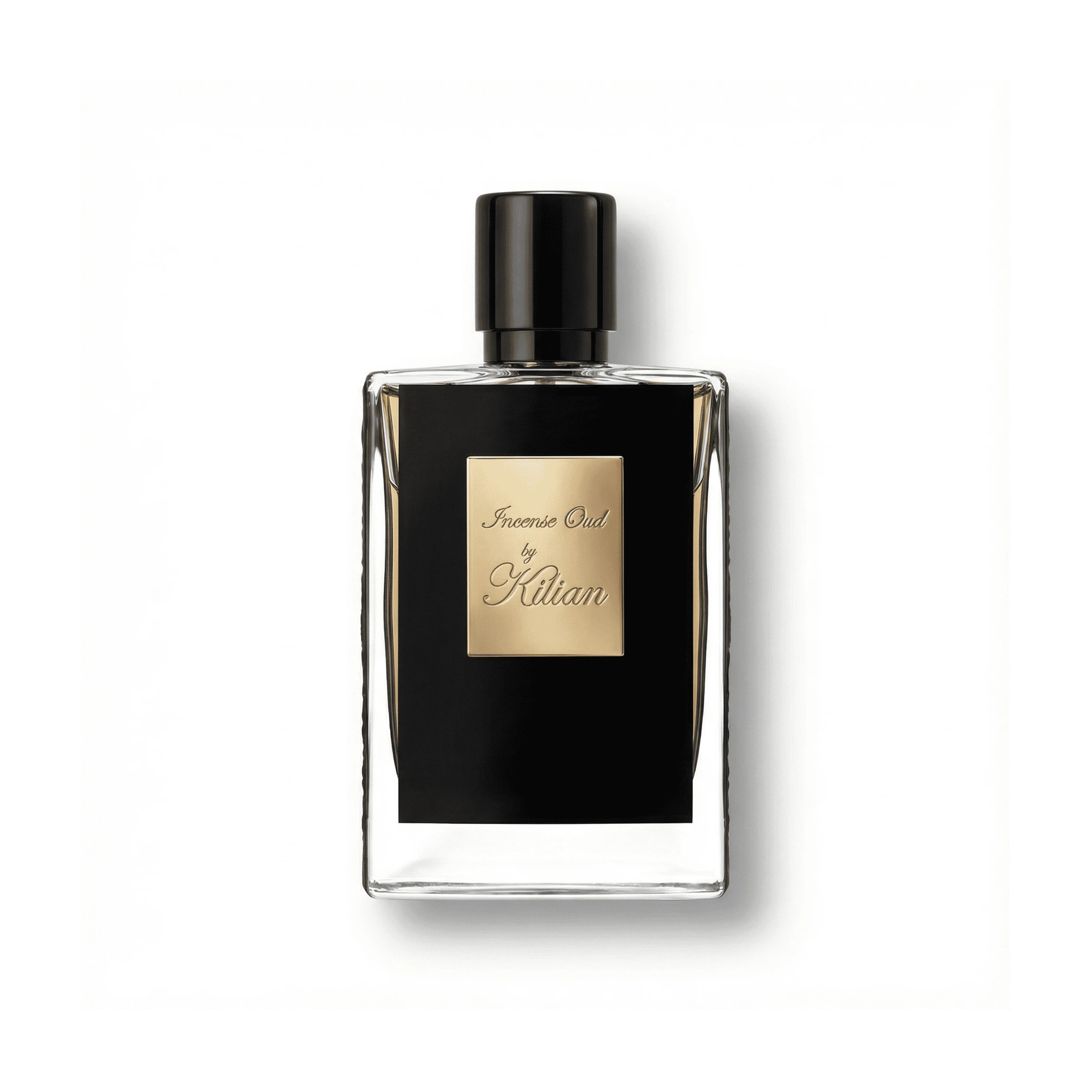
Incense Oud (Batch 2012)
Launched in 2011 as part of the Arabian Nights collection, By Kilian Incense Oud is an Eau de Parfum built around the rituals and raw materials of the Middle East, filtered through a Parisian niche sensibility. Perfumer Sidonie Lancesseur took the core pillars of Arabian perfumery, oud, incense, labdanum, rose, and reframed them for an audience that wanted depth without brutality. The result is a fragrance that feels at once ancient and precise. Aromatica carries the Kilian Incense Oud decant in Bangladesh in all available sizes, so you can test the full arc before settling on a bottle.
Fragrance Notes
Top: Rose, Cardamom, Pink Pepper, Geranium
Heart: Patchouli, Virginia Cedar, Papyrus, Methyl Pamplemousse
Base: Incense, Agarwood (Oud), Sandalwood, Oak Moss, Musk, French Labdanum
The Scent
Warm and immediately spiced, the first impression is built on cardamom and pink pepper, sharp and bright, with a rose that reads more jammy than fresh. There is honeyed sweetness in it rather than petals, something closer to rose preserve than a garden cutting. Geranium adds a faintly green lift that keeps the opening from feeling too heavy, a small counterweight to the richness underneath. Within the first fifteen minutes, the spice settles and the rose deepens, going from jammy to almost syrupy in the best possible way. It does not turn soapy or generic; it gets darker and more resinous as the top notes fade. The cardamom lingers longer than expected, threading through the transition and keeping that initial brightness alive even as the heart begins to assert itself.
The patchouli in the heart is noticeable and intentional. It earths the sweetness, pulls it darker, and gives the fragrance the kind of body that takes it out of the floral category entirely. Virginia cedar adds dry woody structure alongside the patchouli, keeping things from going too soft. The papyrus note is unusual and worth paying attention to. It brings a dusty, papery quality, as if the fragrance carries the memory of old manuscripts and temple walls at the same time. This phase can read as almost archaeological in character, which is apt. The methyl pamplemousse, a synthetic grapefruit molecule, is easy to miss but it matters. It provides a quiet brightness that stops the heart from going completely opaque, a subtle lift that keeps the composition breathing even as it gets denser. Rose and patchouli negotiate between sweetness and earth here, neither fully surrendering to the other, and that tension is precisely what carries the fragrance forward.
Then the base takes over, and this is where Incense Oud earns its name. The incense here is dry and ecclesiastical, not sweet or resinous in the way of many commercial smoke accords. It does not smell like incense sticks or scented candles. It billows slowly, the way smoke moves in a stone room. Notably, the oud is partly constructed: Lancesseur used sandalwood, patchouli, and cistus labdanum to build an approximation of agarwood that is considerably softer than raw Middle Eastern oud. This is a deliberate creative choice, not a shortcut. Those who come to this expecting a heavy Arabic oud may find it surprisingly gentle. It can read sophisticated and balanced on one wearing, or too restrained and lacking the barnyard or fermented quality of natural agarwood on another, depending on skin and expectation. Neither response is wrong. The dry-down settles into warm labdanum and sandalwood laced with oak moss, a slow-burning resinous finish that lingers close to skin. The labdanum anchors everything, adding a slightly animalic warmth that ties the incense and oud facets together in the final hours. What you are left with is something both intimate and ceremonial, quiet on skin but unmistakable to anyone nearby.
When to Wear
Incense Oud is built for cool-weather wear, autumn evenings, and winter gatherings where the air has some weight to it. It suits formal dinners, cultural events, and late-night occasions where a fragrance with presence and depth is appropriate; browse the Dates & Nights collection for other fragrances in this register.
Who Is It For
The wearer drawn to Middle Eastern perfumery traditions, but who prefers their smoke dry and their rose dark rather than syrupy-sweet or overtly animalic, will find in this an oud built around European restraint rather than raw power.
If you enjoy Amouage Rose Incense, this shares the same rose-meets-sacred-smoke architecture and is worth a direct comparison. Browse the full Kilian collection at Aromatica.
Available as an authentic decant in Bangladesh at Aromatica in 3ml, 5ml, 9ml, and 15ml.
Original: $1,769.00
-65%$1,769.00
$619.15Product Information
Product Information
Shipping & Returns
Shipping & Returns
Description
Launched in 2011 as part of the Arabian Nights collection, By Kilian Incense Oud is an Eau de Parfum built around the rituals and raw materials of the Middle East, filtered through a Parisian niche sensibility. Perfumer Sidonie Lancesseur took the core pillars of Arabian perfumery, oud, incense, labdanum, rose, and reframed them for an audience that wanted depth without brutality. The result is a fragrance that feels at once ancient and precise. Aromatica carries the Kilian Incense Oud decant in Bangladesh in all available sizes, so you can test the full arc before settling on a bottle.
Fragrance Notes
Top: Rose, Cardamom, Pink Pepper, Geranium
Heart: Patchouli, Virginia Cedar, Papyrus, Methyl Pamplemousse
Base: Incense, Agarwood (Oud), Sandalwood, Oak Moss, Musk, French Labdanum
The Scent
Warm and immediately spiced, the first impression is built on cardamom and pink pepper, sharp and bright, with a rose that reads more jammy than fresh. There is honeyed sweetness in it rather than petals, something closer to rose preserve than a garden cutting. Geranium adds a faintly green lift that keeps the opening from feeling too heavy, a small counterweight to the richness underneath. Within the first fifteen minutes, the spice settles and the rose deepens, going from jammy to almost syrupy in the best possible way. It does not turn soapy or generic; it gets darker and more resinous as the top notes fade. The cardamom lingers longer than expected, threading through the transition and keeping that initial brightness alive even as the heart begins to assert itself.
The patchouli in the heart is noticeable and intentional. It earths the sweetness, pulls it darker, and gives the fragrance the kind of body that takes it out of the floral category entirely. Virginia cedar adds dry woody structure alongside the patchouli, keeping things from going too soft. The papyrus note is unusual and worth paying attention to. It brings a dusty, papery quality, as if the fragrance carries the memory of old manuscripts and temple walls at the same time. This phase can read as almost archaeological in character, which is apt. The methyl pamplemousse, a synthetic grapefruit molecule, is easy to miss but it matters. It provides a quiet brightness that stops the heart from going completely opaque, a subtle lift that keeps the composition breathing even as it gets denser. Rose and patchouli negotiate between sweetness and earth here, neither fully surrendering to the other, and that tension is precisely what carries the fragrance forward.
Then the base takes over, and this is where Incense Oud earns its name. The incense here is dry and ecclesiastical, not sweet or resinous in the way of many commercial smoke accords. It does not smell like incense sticks or scented candles. It billows slowly, the way smoke moves in a stone room. Notably, the oud is partly constructed: Lancesseur used sandalwood, patchouli, and cistus labdanum to build an approximation of agarwood that is considerably softer than raw Middle Eastern oud. This is a deliberate creative choice, not a shortcut. Those who come to this expecting a heavy Arabic oud may find it surprisingly gentle. It can read sophisticated and balanced on one wearing, or too restrained and lacking the barnyard or fermented quality of natural agarwood on another, depending on skin and expectation. Neither response is wrong. The dry-down settles into warm labdanum and sandalwood laced with oak moss, a slow-burning resinous finish that lingers close to skin. The labdanum anchors everything, adding a slightly animalic warmth that ties the incense and oud facets together in the final hours. What you are left with is something both intimate and ceremonial, quiet on skin but unmistakable to anyone nearby.
When to Wear
Incense Oud is built for cool-weather wear, autumn evenings, and winter gatherings where the air has some weight to it. It suits formal dinners, cultural events, and late-night occasions where a fragrance with presence and depth is appropriate; browse the Dates & Nights collection for other fragrances in this register.
Who Is It For
The wearer drawn to Middle Eastern perfumery traditions, but who prefers their smoke dry and their rose dark rather than syrupy-sweet or overtly animalic, will find in this an oud built around European restraint rather than raw power.
If you enjoy Amouage Rose Incense, this shares the same rose-meets-sacred-smoke architecture and is worth a direct comparison. Browse the full Kilian collection at Aromatica.
Available as an authentic decant in Bangladesh at Aromatica in 3ml, 5ml, 9ml, and 15ml.